The evolution of consumer demand pushes modern personal care brands to re-evaluate their production floor mechanics. Rapid output demands, mixed with rigid safety compliance, make manual manufacturing methods completely obsolete. For businesses managing global private labels, understanding the integration of specialized equipment is no longer an optional study. As an established personal hygiene organization, we recognize that optimizing high-speed manufacturing assets directly affects bottom-line profitability and consumer trust. Let us analyze how tracking Automation Trends in Factory Production Lines changes operational outcomes for modern brands.
Precision Control in Material Layering
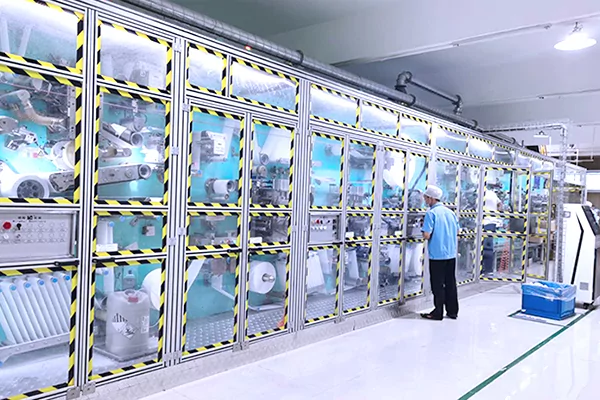
Feminine care production demands high mechanical accuracy since multiple delicate components must bond perfectly at high speeds. Advanced machines utilize specialized optical sensors and tension control networks to coordinate raw material feeds without stretching thin non-woven fabrics. When a brand partners with an experienced sanitary napkin manufacturer, they gain access to structured production setups capable of maintaining micrometer-level precision. Our facilities leverage these automated systems to handle multi-layered absorption matrices without human intervention, reducing scrap material rates drastically.
Data Integration and Real-Time Inspection
Modern assembly setups rely on digital vision systems that cross-examine every single piece against strict pre-programmed dimensional templates. These cameras capture surface micro-defects or misaligned adhesive lines faster than a manual inspector ever could. Utilizing an automated sanitary napkin factory layout ensures that any unit displaying substandard placement is instantly isolated via specialized air-rejection valves without halting the primary conveyor stream. We utilize this continuous monitoring approach to help international partners eliminate product defects before shipments leave the floor.
Scaling Volume via Continuous Stream Output
Manual physical handling slows down packaging paces and introduces unnecessary contamination vectors into cleanroom environments. Modern packaging automation acts as a crucial asset by bundling, wrapping, and boxing finished goods in one uninterrupted automated mechanical workflow. This shift toward complete mechanical autonomy allows a sanitary napkin manufacturer to fulfill large-scale global private label requests well within tight supply chain deadlines. By implementing high-capacity single-line setups, we maintain a steady annual production capacity reaching 680 million pieces.
Sustainable Operational Cost Reduction
Long-term commercial viability in competitive personal care landscapes depends directly on minimizing energy utilization and mechanical downtime. Modern manufacturing setups utilize predictive diagnostic tools that alert maintenance teams about component wear before an actual mechanical breakdown occurs. Transitioning your supply pipeline to a modern sanitary napkin factory environment minimizes expensive emergency production stops while maintaining uniform product thickness across millions of production units. At Shuya, we continue investing in these smart systems to provide stable, scalable private label options for global brands.